CPAP not working the way you hoped?
There’s a therapy that works on the root cause, not just the symptom.
CPAP keeps your airway open. It doesn’t do anything to make your airway better at staying open on its own.
That means every night you wear it, it probably works. And every night you don’t, it doesn’t. For a lot of people, that’s the frustrating math of long-term CPAP use. It is better sleep when it’s on, but sleeping with a mask on is genuinely hard to sustain.
If you’re here because you’ve struggled with consistency, or because you’re looking for something that changes the underlying situation rather than managing it night after night, that’s exactly what myofunctional therapy is designed to do. It retrains the muscles that keep the airway open, so they do more of that work on their own. For many people with mild-to-moderate sleep apnea, the results are significant.

What’s actually happening when you snore or stop breathing
During sleep, the muscles of the tongue, throat, and soft palate relax. In some people, they relax too much. This causes the airway to partially or fully collapse, airflow is reduced or cut off, and the brain wakes the body just enough to restore breathing. You may not even remember it. But it fragments your sleep, taxes your cardiovascular system, and leaves you waking exhausted.
CPAP holds the airway open with pressurized air. It’s effective when used correctly. But the underlying muscle tone doesn’t improve.
Instead, the machine does the work every night, indefinitely. For some people, that’s the right long-term answer. For others, there’s a path that changes what the muscles do on their own.
A 2015 meta-analysis published in the journal SLEEP found that myofunctional therapy reduced sleep apnea severity by approximately 50% in adults with mild-to-moderate obstructive sleep apnea. Most people with sleep apnea have never been told this is an option.
What myofunctional therapy actually does
Myofunctional therapy is a structured exercise program that strengthens and retrains the muscles of the mouth, tongue, and throat. When those muscles develop better tone and resting posture, the airway is physically more stable during sleep. This reduces how much the airway collapses, and in many cases reduces how much work the airway has to do.
Who it helps
- Sleeping with mouth open, consistently
- Snoring, even lightly
- Restless sleep, frequent waking, or waking unrefreshed
- Tongue tie (diagnosed or suspected, before or after release)
- Speech delays, lisping, or articulation concerns
- Crowded, crooked, or erupting teeth in unusual patterns
- Narrow palate or high-arched roof of the mouth
- Bedwetting beyond typical developmental age
- Difficulty focusing, hyperactivity, or behavior concerns linked to poor sleep
What it doesn’t replace
- Myofunctional therapy is not a substitute for CPAP in severe sleep apnea. If your AHI is high and your sleep physician has recommended PAP therapy, that recommendation matters. But for mild-to-moderate cases, or as a complement to CPAP, the evidence is strong that myofunctional therapy can help.
Four things that make the program work:
1. Qualified Team
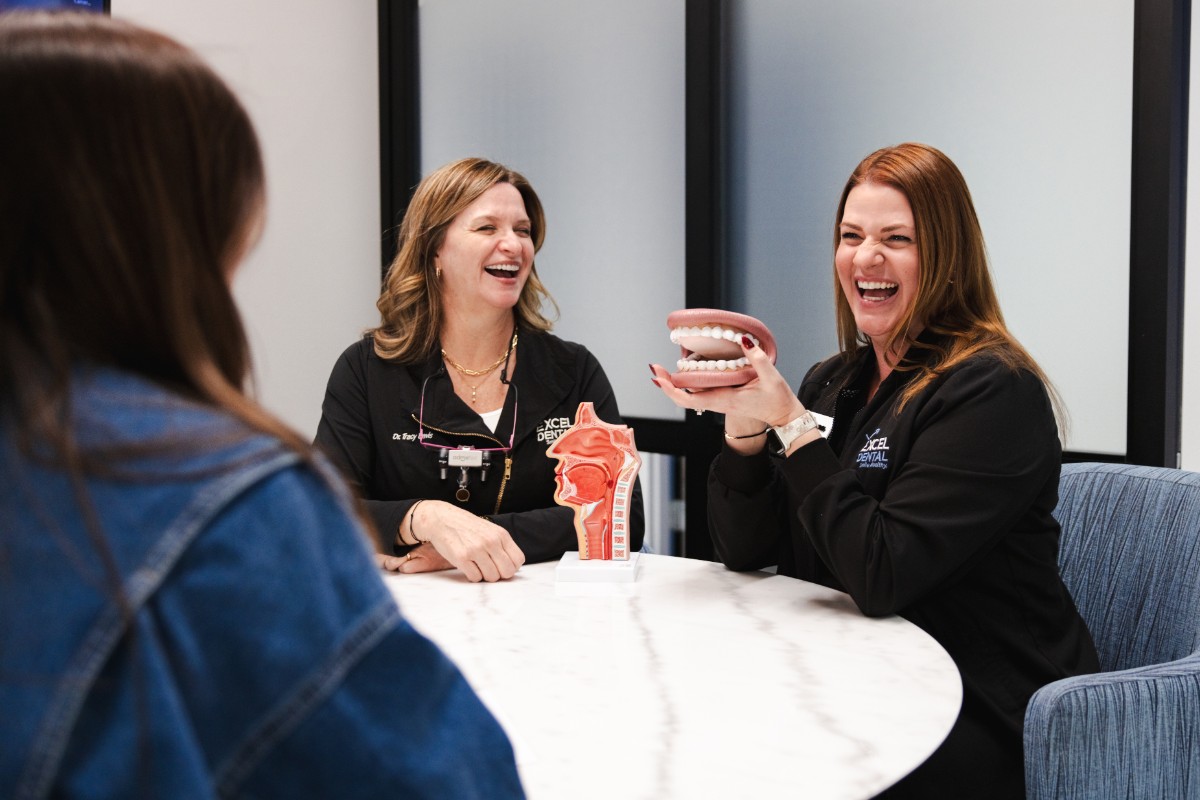
Dr. Tracy Davis is a general dentist with an airway-focused approach, integrating airway health into comprehensive dental care. Jenna Lyons, RDH, is our certified myofunctional therapist, providing myofunctional therapy for appropriate patients.
2. Personalized Program
Built from your evaluation. Your airway, your goals, your schedule.
3. In-Office or Virtual
The initial evaluation is in person. All follow-up sessions can be virtual, which makes staying consistent significantly easier.
4. Coordinated Care
If you’re working with a sleep physician or ENT, we communicate with them. You don’t have to manage the information flow between providers on your own.
What to expect
Every patient starts with an evaluation and ends with a program built around their specific symptoms and goals.
1. Initial evaluation in person
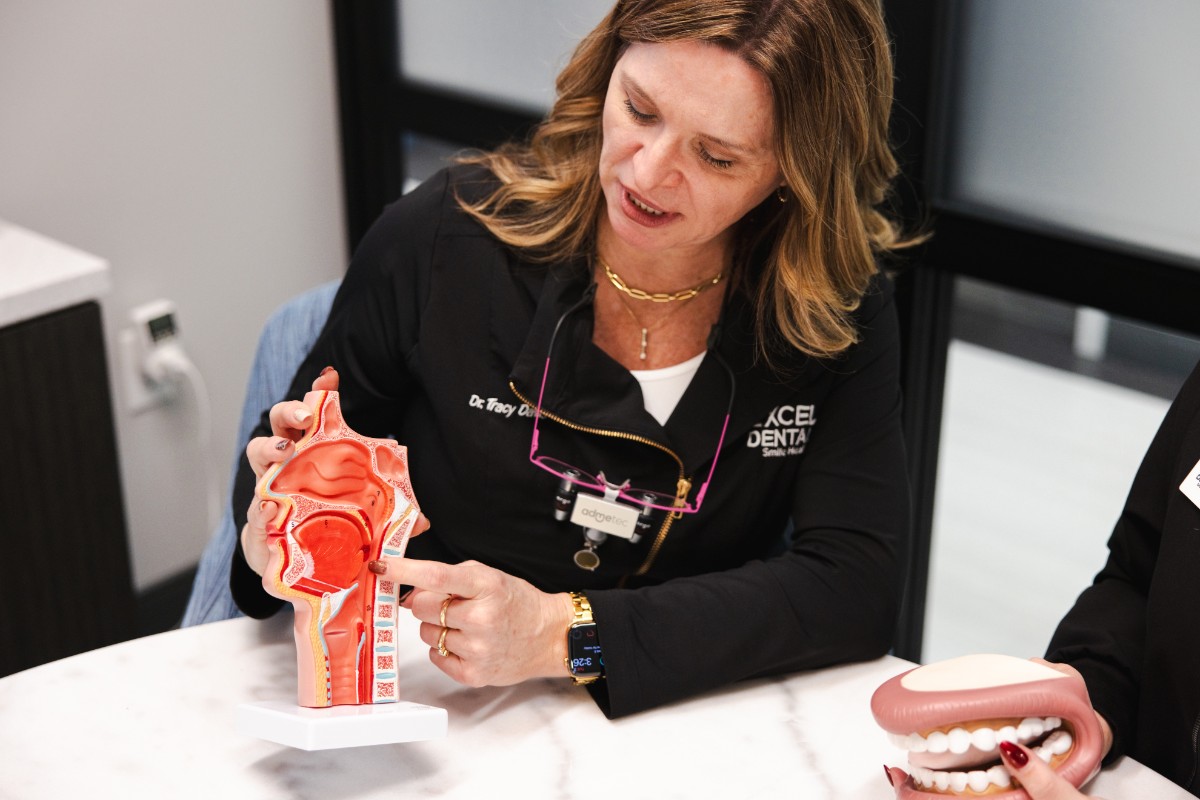
A thorough look at your breathing patterns, tongue posture, swallowing function, and oral structure. We’ll go through your history — including any sleep study results or current CPAP use — and figure out whether myofunctional therapy is a good fit, and what the realistic goals are.
2. A program built for you
Based on the evaluation, our therapists build a customized exercise plan and walk you through the first exercises before you leave. Daily practice takes about 10–15 minutes.
3. Active Therapy — Months 1 through 3
Regular sessions every one to two weeks to advance the program and check in on progress. In-office or virtual, your choice after the initial visit.
4. Refinement & Completion — Months 3 through 6
As the muscle patterns improve, sessions focus on reinforcing the new habits. Most programs wrap up within four to six months. We provide a summary to any involved providers and a maintenance plan to protect the results.
Meet our myofunctional therapists
Jenna Lyons
Jenna is a qualified myofunctional therapist with training from well known MyoMentor, serving children and adults throughout the Ozarks area. She focuses on airway health, post-frenectomy therapy, and sleep disordered breathing, using a comprehensive, patient-centered approach to support long-term functional outcomes. Jenna is passionate about helping patients improve breathing, oral function, and overall quality of life through individualized care.
Jenna believes every patient who walks in with a breathing problem deserves a provider who asks why — not just what.
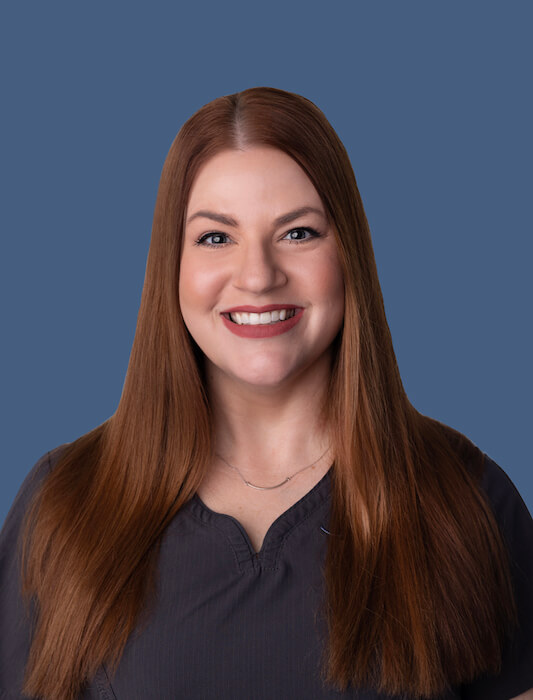
Dr. Tracy Davis
Dr. Davis is dedicated to helping patients breathe, sleep, and live healthier through personalized airway-focused dental care. She is passionate about identifying underlying airway concerns that may impact sleep, overall health, growth, and quality of life. In alignment with the American Dental Association recommendation that dentists screen patients for possible airway-related issues, Dr. Davis believes comprehensive dental care extends far beyond teeth alone. She loves building lifelong relationships with patients and believes dentistry is a unique blend of science, health, and artistry. A top graduate of the University of Missouri–Kansas City School of Dentistry and a Kois Center Graduate, Dr. Davis brings advanced training, clinical excellence, and a compassionate approach to every patient experience
Dr. Davis is committed to helping patients breathe better, sleep healthier, and feel their best through compassionate, personalized care built on trust and lasting relationships.

Questions we hear from patients
Can myofunctional therapy replace my CPAP?
For some people with mild-to-moderate sleep apnea, yes — eventually, and with guidance from their sleep physician. For others, it significantly reduces how much they need CPAP, or improves their ability to use it consistently. For severe sleep apnea, CPAP remains important. We’ll be honest with you at your evaluation about what’s realistic for your specific situation.
What if I have severe sleep apnea?
If your sleep apnea is severe, CPAP or another PAP therapy is still the most important intervention. But myofunctional therapy can still play a role, improving muscle tone, supporting better CPAP adherence, and contributing to overall airway health. It’s worth a conversation.
How long before I notice a difference?
Most patients start noticing changes in sleep quality and energy within the first two to three months, though the full program runs four to six months. Like physical therapy, results are proportional to consistency. Patients who practice daily see the fastest and most lasting progress.
Do I need a referral?
No. You can book an evaluation directly. A free 15-minute call is also available if you’d like to talk through your situation first. If you’re working with a sleep physician, we’re happy to coordinate with them, but it’s not required to get started.
Can I do sessions virtually?
The initial evaluation has to be in person. After that, all follow-up sessions can be done virtually — which most adult patients prefer. Virtual sessions are fully effective for exercise review, progress check-ins, and program advancement.
Is it covered by insurance?
Some medical insurance plans cover myofunctional therapy when it’s associated with a sleep apnea diagnosis. Dental insurance rarely covers it. We can provide documentation for you to submit to your insurance company to support your reimbursement claims. However, please note that we do not file insurance claims for myofunctional therapy. Contact us before your first appointment and we’ll help you understand what may apply.
What if I’ve tried other things and nothing worked?
Myofunctional therapy goes beyond the symptoms to address the muscular root cause. If you’ve tried positional devices, mouthguards, or lifestyle changes without lasting results, the issue may be muscular and structural rather than behavioral. A free 15-minute call is a low-commitment way to find out if this is the right path.
Ready to get started?
Call (417) 581-3600